Kyle Gao - Homepage
About
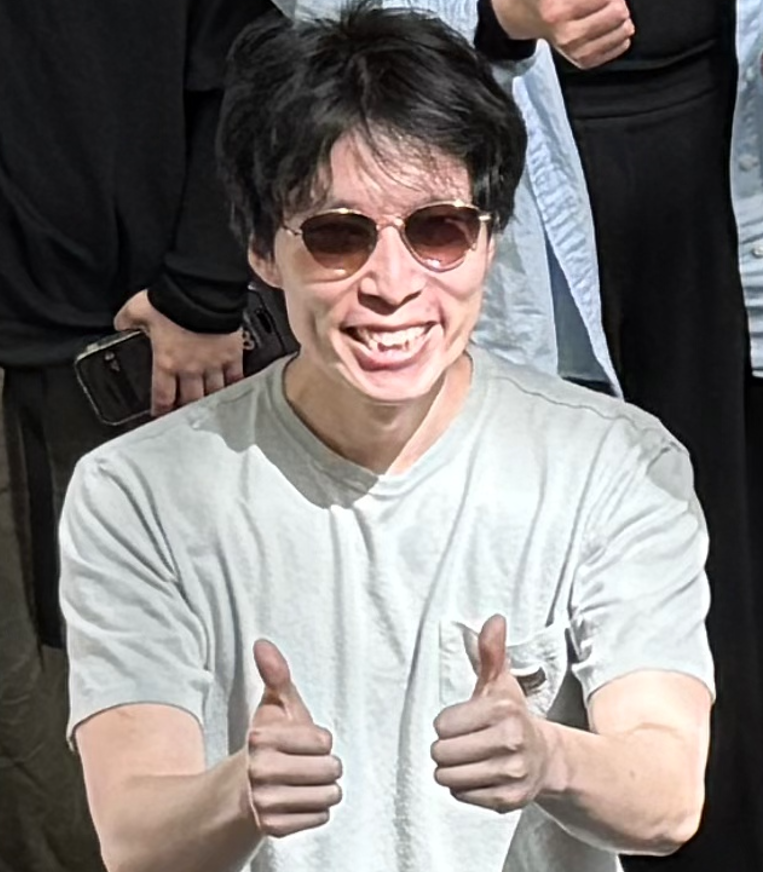
I’m Kyle (Yilin) Gao, a Tenure Track Assistant Professor of Geoinformatics in the Department of Built Environment at Aalto University, and a Visiting Scholar in the Department of Computer Science and Technology at the University of Cambridge.
I completed my PhD in Systems Design Engineering at the University of Waterloo in May 2025, followed by a one year postdoctoral appointment in the same department, where I held an NSERC CPRA Fellowship, and was awarded a Schmidt AI in Science Fellowship. I have a background in mathematical physics from my undergraduate and master’s studies.
I focus on 3D modelling, agentic systems in GIS, and Earth foundation models for studying the natural and built environment. My broader research spans remote sensing, geoinformatics, GeoAI, 3D computer vision, and multimodal machine learning, and various applications thereof.
I’ve authored and co-authored over fourty nine peer-reviewed papers (nine first-authorships), including publications in IEEE Transactions on Geoscience and Remote Sensing and the ISPRS Journal of Photogrammetry and Remote Sensing. My current work focuses on building intelligent, multimodal systems for remote sensing that integrate 3D reconstruction, geospatial data, visual analysis, and agentic systems for applications in both urban digital twins and environmental management.
Recent Highlights
IGARSS 2026
I’m excited to be attending IGARSS 2026 in Washington, D.C., from August 9–14! I’ll be presenting two papers and chairing seven sessions covering GeoAI, vision-language models, LiDAR, and wildfire monitoring.
Paper Presentations
TU1.R6.4: Rapid Forest Fuel Load Estimation via Virtual Remote Sensing and Metric-Scale Feed-Forward 3D Reconstruction
Session: TU1.R6: Advances in GeoAI Systems for Wildfire Monitoring Time: Tuesday, 11 August, 08:30–09:45 Format: Oral
THP2.PI.5: Tree Canopy Segmentation in Low-Data Regimes Using Pretrained Deep Models
Session: THP2.PI: Remote Sensing and Geospatial Modeling of Wildfire Risk, Detection, and Recovery Time: Thursday, 13 August, 15:00–16:15 Format: Poster, Board PI.5
Session Chairing
I’ll also be chairing the following sessions throughout the conference:
TU1.R6: Advances in GeoAI Systems for Wildfire Monitoring Tuesday, 11 August, 08:30–09:45 · Oral · Cardozo
WE1.R15: Vision-Language Models for Remote Sensing: Foundations, Applications, and Challenges (1/3) Wednesday, 12 August, 08:30–09:45 · Oral · Jefferson West
WE2.R15: Vision-Language Models for Remote Sensing: Foundations, Applications, and Challenges (2/3) Wednesday, 12 August, 11:00–12:15 · Oral · Jefferson West
WE3.R15: Vision-Language Models for Remote Sensing: Foundations, Applications, and Challenges (3/3) Wednesday, 12 August, 13:45–15:00 · Oral · Jefferson West
TH1.R10: Scalable and Efficient Processing of Large-Scale LiDAR Point Clouds Thursday, 13 August, 08:30–09:45 · Oral · Gunston
THP2.PC: Vision-Language Models for Remote Sensing: Foundations, Applications, and Challenges Thursday, 13 August, 15:00–16:15 · Poster · Columbia, Poster Area C
THP2.PI: Remote Sensing and Geospatial Modeling of Wildfire Risk, Detection, and Recovery Thursday, 13 August, 15:00–16:15 · Poster · Columbia, Poster Area I
Looking forward to an exciting week of research, discussions, and collaborations across remote sensing, photogrammetry, computer vision, and GeoAI. See you at IGARSS 2026!
August 2026 — Joined Aalto University!
I joined Aalto University as a Tenure Track Assistant Professor of Geoinformatics in the Department of Built Environment.
My research focuses on large-scale 3D geospatial modelling, agentic systems in GIS, and Earth foundation models for studying the natural and built environment. I look forward to building an interdisciplinary research program and collaborating with colleagues across Aalto and the international geospatial AI community.
July 2026 — Visiting Scholar at the University of Cambridge!
I joined the Department of Computer Science and Technology at the University of Cambridge as a Visiting Scholar in the Energy and Environment Group.
My research contributes to the TESSERA project, with a focus on representation learning and the application of TESSERA embeddings to studying the natural and built environment. This appointment also supports new international collaborations in GeoAI, Earth foundation models, and environmental monitoring.
July 2026 — 25th ISPRS Congress
Attending the 25th ISPRS Congress in Toronto with two oral presentations and three poster presentations on 3D reconstruction, Gaussian splatting, agentic AI systems, and large language models (LLMs) for GeoAI.
Oral Presentations
- Digital Building Analysis (DBA): Cloud-GIS-Based 3D Building Modelling and Multi-Agent AI Analytics Using Gaussian Splatting and Google Maps Platform
- Advances in 3D Urban Reconstruction and Building Mesh Extraction Using Gaussian Splatting and Google Earth
Paper & Poster
- Risk-Aware LLM Agents for Geospatial Data Retrieval: Design and Preliminary Adversarial Evaluation
Poster Presentations
- VGGT-SLAM for 3D Reconstruction of Low-Altitude Remote Sensing Data: Feasibility and Limitations
- Interactive 3D Scene Segmentation for Construction Sites via Gaussian Splatting and Foundation Models
I also chaired Thematic Session 37: Multimodal Large Language Models for Remote Sensing Image Modalities, and Invited Session: Canadian Remote Sensing for Urban Applications
May 2026 — CVPR 2026
We are pleased to share that two of our works have been accepted to CVPR 2026 workshops, where we will present preliminary results.
Workshop Presentation CVPR 2026: Workshop on Foundation and Large Vision Models in Remote Sensing
Title: BuildingTwin: Geometrically Grounded Building-Centric 3D Reconstruction for Urban Digital Twins
Workshop Paper: CVPR 2026: MetaFood Workshop
Title: KitchenTwin: Semantically and Geometrically Grounded 3D Kitchen Digital Twins
Both works explore geometrically grounded and semantically consistent 3D reconstruction for digital twin applications.
See you in Denver!
February 2026 — Computational Visual Media (SJR Q1, IF~18.6)
Publication: NeRF: Neural Radiance Field in 3D Vision: A Comprehensive Review
As the first author, I am excited to share that our paper has been accepted for publication in Computational Visual Media, with 400+ citations as of February 2026!
This work provides a comprehensive and systematic review of Neural Radiance Fields in 3D vision, covering theoretical foundations, architectural variants, optimization strategies, contextualization in the post-Gaussian Splatting era.
February 2026 — International Journal of Applied Earth Observation and Geoinformation (SJR Q1, IF~8.6)
Publication: High-Accuracy Water Level Estimation Using Super-Resolution Sentinel-1 Data
As a co-author, I am excited to share our paper which was accepted in International Journal of Applied Earth Observation and Geoinformation.
By leveraging super-resolution Sentinel-1 SAR imagery, our work presents a high-accuracy framework for water level estimation that enhances hydrological monitoring and flood risk assessment.
January 2026 — International Journal of Digital Earth (SJR Q1, IF~4.9)
Publication: SaLSE-net: a self-attention-based local structure enhancement network for landslide point cloud segmentation
As a co-author, I am excited to share our paper which was published in International Journal of Digital Earth.
SaLSE-net introduces a self-attention-based local structure enhancement network for precise landslide point cloud segmentation under complex geomorphological conditions.
December 2025 — IGARSS 2026
IGARSS 2026 conference submissions are open.
📅 Submission deadline: January 10, 2026
📄 See the submission page https://2026.ieeeigarss.org/papers.php
Consider submitting an abstract, full paper, or summary of a recently published article to my Community Contributed Theme CCT.77 D.7 “Advances in GeoAI systems for Wildfire Monitoring”, which I am chairing together with Prof. Liangzhi Li and Prof. Linlin Xu.
See you in Washington, D.C., August 9 to 14, 2026!
November 2025 — Remote Sensing Applications: Society and Environment (SJR Q1, IF~4.5)
Publication: Gaussian Building Mesh (GBM): Extract a building’s 3D mesh with Google Earth and Gaussian Splatting
As the first author, I am excited to share my paper which was accepted for publication in Remote Sensing Applications: Society and Environment. By leveraging Google Earth Studio and Gaussian Splatting, my work introduces a way to extract the 3D mesh of a building using only its address!
October 1, 2025 — Photogrammetric Engineering & Remote Sensing
I am hosting a special issue in Photogrammetric Engineering & Remote Sensing titled
“Large Language Models in Remote Sensing: Across Different Modalities”,
together with Dr. Dening Lu and Prof. Linlin Xu.
📅 Submission deadline: November 1, 2026
📄 See the call for papers here.
September 3, 2025 — IEEE Transactions on Geoscience and Remote Sensing (TGRS) (SJR Q1, IF~8.6)
Publication: Exploring Token Serialization for Mamba-based LiDAR Point Cloud Segmentation
I’m thrilled to share that this paper I co-authored has been accepted for publication in IEEE TGRS!
Thank you to the first author, my friend and colleague, Dr. Dening Lu.
September 2, 2025 — IEEE Geoscience and Remote Sensing Letters (GSRL) (SJR Q1, IF~4.4)
Publication: Digital Buildings Analysis: 3D Modeling, GIS Integration, and Visual Descriptions Using Gaussian Splatting, ChatGPT/Deepseek, and Google Maps Platform
My first-authored paper has been published in IEEE GRSL.
I would like to thank my coauthors for their excellent collaboration and contributions.
August 19, 2025 — International Journal of Applied Earth Observation and Geoinformation (JAG)
Publication: Instructor–Worker Large Language Model System for Policy Recommendation: A Case Study on Air Quality Analysis of the January 2025 Los Angeles Wildfires
As the first author, I’m excited to share this paper (published in JAG) which integrates Google Maps data and Large Language Models to study air quality and how it was affected by the January 2025 Los Angeles wildfires.
My thoughts go to all affected by this tragic event.
August 6, 2025 — XXV ISPRS Congress and 47th Canadian Symposium on Remote Sensing
Role: Session Chair
I am honored to chair the ISPRS’26 Thematic Session on “Multimodal Large Language Models for Remote Sensing”, focusing on image-based modalities.
Looking forward to seeing everyone in Toronto in July 2026!
July 21, 2025 — The 40th Annual AAAI Conference on Artificial Intelligence
Service: Program Committee Member
I’ve accepted the invitation to serve on the Program Committee of AAAI’26!
Excited to review submissions and connect with colleagues in Singapore, January 2026.